Google All in Agent: From Search to Glasses, Every Product Now Has Gemini
Google I/O 2026 made one thing clear: Google is going all-in on AI Agents. Not just Search—Glasses, phones, cloud services, even IoT devices. All of them now come with Gemini built in. But does "all in" mean "everything connected"? For Kaihe users, the smarter Google gets, the more valuable your local-first approach becomes.
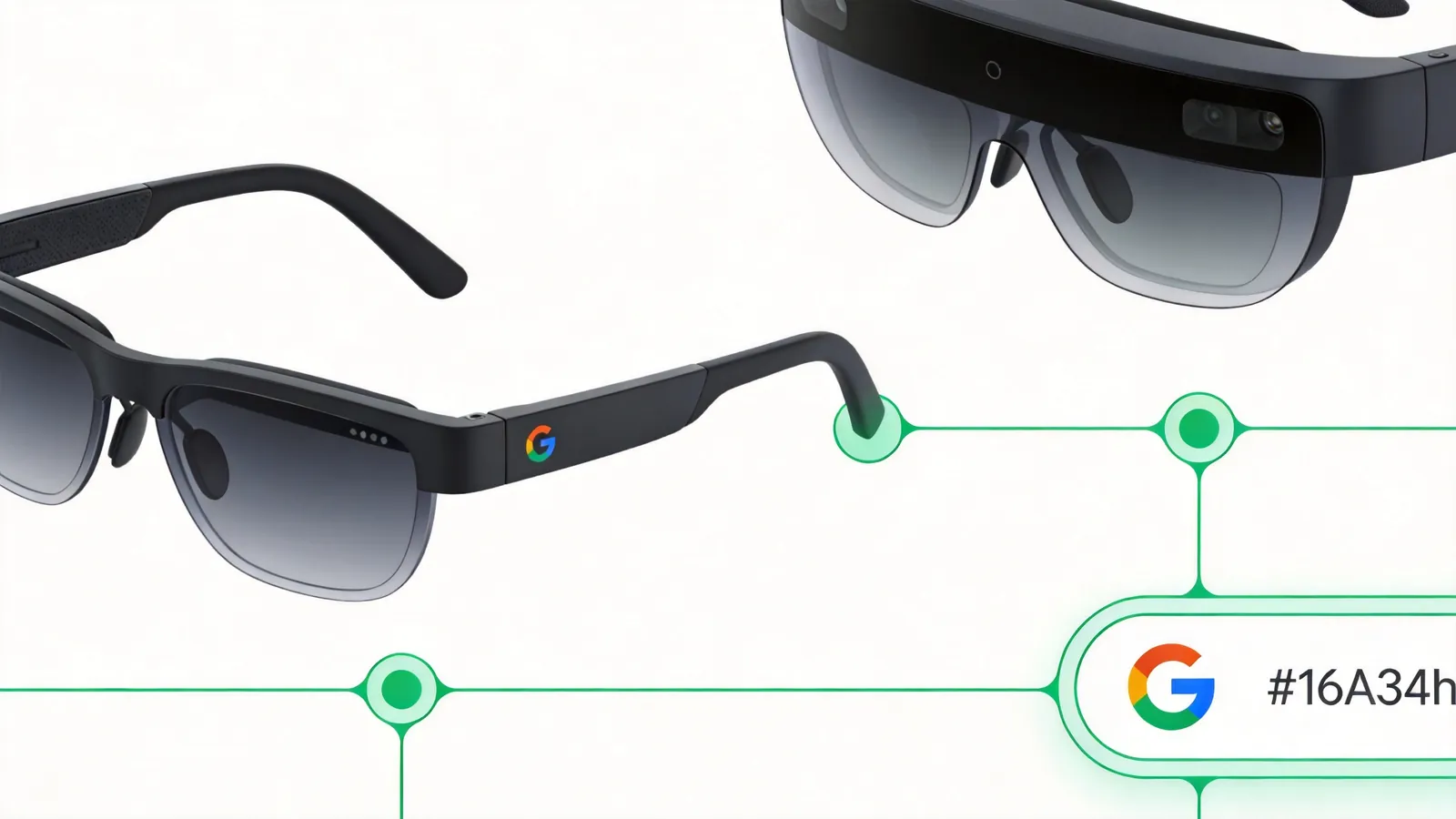
Google's "Agent Everywhere" Strategy
Let's be precise about what Google announced:
| Product | Agent Name | What It Does |
|---|---|---|
| Search | AI Mode | Understands intent, completes tasks, not just links |
| Android | Gemini Spark | 7×24 background agent, completes tasks while you sleep |
| Glasses | AI Glasses | Visual AI—sees what you see, adds context |
| Cloud | Cloud Agent | Manages resources, auto-scales, monitors costs |
| Workspace | Agentic Workspace | Writes, edits, collaborates across Docs/Sheets/Gmail |
One company, one agent architecture, every product. This is what "all in" means.
The Privacy Problem You Should Care About
Every Google product now feeding data into the same agent brain:
- Search history → Gemini personalization
- Gmail content → Agent draft replies
- Calendar data → Agent schedules meetings
- Maps history → Agent suggests routes, restaurants
- Photos → Agent organizes, captions, searches
All of it on Google servers. All of it used to train their models. All of it accessible via subpoena.
A Google employee explained it plainly: "Gemini works best when it knows everything about you."
That's exactly the problem.
The Comparison: Google Agent vs. Kaihe Local Agent
| Capability | Google (Cloud) | Kaihe (Local) |
|---|---|---|
| Data location | Google servers | Your home |
| Monthly cost | ¥200-500 (API calls) | ¥0 (after hardware) |
| Works offline | No | Yes |
| Can be subpoenaed | Yes | No |
| Remembers forever | Yes (on Google servers) | You decide |
| Switch models freely | No (locked to Gemini) | Yes (GPT/Claude/DeepSeek) |
Core difference: Google's agent is Google's product that you get to use. Kaihe's agent is your product that you control completely.
What Google Got Right (Credit Where It's Due)
I'm not here to bash Google. They built impressive stuff:
- Gemini Spark — Truly 7×24, actually works
- Cross-app execution — Agent fills forms across websites, genuinely useful
- Visual understanding (Glasses) — AI that sees what you see is powerful
- Developer ecosystem — Tools everywhere, serious commitment
But here's the thing: All of these capabilities can run locally. Google chose cloud because that's their business model, not because local is impossible.
The Kaihe Counter-ulture: Local-First Agent
Instead of "all in" on one company's cloud, we're building "all in" on your own hardware:
What "Local-First" Means
- Your agent runs on your Kaihe box — not Google's servers
- Your data stays in your home — not scattered across 10 Google products
- You choose which LLM to call — GPT for one task, Claude for another, DeepSeek for a third
- You decide what to remember — not Google's algorithm deciding for you
- ¥0 monthly API costs — after the one-time hardware purchase
How To Do It (Today)
¥998 gets you: 1. Kaihe A1 (hardware) 2. OpenClaw (agent framework) 3. Hermes (self-evolving agent) 4. Complete local control
Google's equivalent setup: ¥998 hardware + ¥300-500/month API costs. After 2 years, Google costs 3× more.
The Smart People Are Already Switching
A pattern I'm seeing: Technical founders buying Kaihe boxes specifically to avoid Google's agent ecosystem.
Why? 1. They've seen where this goes — 5 years of feeding Google data = Google knows you better than your spouse 2. They value control — "I want my agent to work for me, not report back to a corporation" 3. They run businesses — Customer data on Google servers = liability they don't want
One founder told me: "I'm happy Google is validating the agent era. I'm happier that my agent runs on my own hardware."
The Right Way to Think About Google's Moves
Google going all-in on agents is the best validation of the local-agent approach.
Here's why: 1. They're spending billions to educate the market — "agents are the future" ← Google just paid for that superbowl ad 2. They're creating demand — every new Google agent user is a potential Kaihe user who'll eventually care about privacy 3. They're raising the baseline — "what can an agent do?" ← Google just set the answer at "quite a lot"
Your strategy: Let Google spend the marketing budget. You build the privacy-first alternative they can't offer.
Practical: How To Get Google-Level Agent Capabilities, Locally
You don't need to wait for Google's Glasses. You can do this today:
Setup (¥998 total)
- Kaihe A1 — ¥998 (one-time)
- OpenClaw installed — ¥0 (open-source)
- Hermes running — ¥0 (open-source)
- LLM API key (GPT/Claude/DeepSeek) — ¥20-100/month (or ¥0 with local models)
Capabilities (Today)
- ✅ 7×24 operation — Kaihe A1 draws 5W, runs forever
- ✅ Cross-app execution — OpenClaw can control WeChat, email, browsers
- ✅ Visual understanding — Add a ¥200 USB camera, Kaihe processes visual input
- ✅ Memory — Hermes remembers across sessions, locally
- ✅ Cost — After hardware, ¥0/month if you use DeepSeek
Google's equivalent: Same capabilities, but your data lives on their servers, and you pay ¥300-500/month forever.
The Bottom Line
Google's "all in" agent strategy is impressive engineering. It's also a masterclass in vendor lock-in.
Every Google product now feeds data into the same agent brain. Every agent interaction trains their models. Every month, you pay their API tax.
Kaihe's approach: Same agent capabilities. Your data stays home. Your hardware, your rules, your costs under control.
Google just spent billions to tell the world: Agents are the future.
Kaihe's reply: "We know. That's why yours runs in your home, not ours."
Kaihe Intelligence-AI Agent Column: Tracking the latest AI Agent product developments. Want capabilities like Google's agents? Get them locally. Follow us.
Kaihe Intelligence-AI Frontier Column: Tracking the latest LLM industry trends. Follow us to decode AI directions.