Kai-Fu Lee's Latest Verdict: AI Isn't Replacing Your Job—It's Replacing Your Entire Department
At AMD AI Developer Day on May 19, Kai-Fu Lee dropped a spine-chilling insight during his conversation with AMD CEO Lisa Su: "DRI + Multi-Agent" is about to restructure the fundamental unit of enterprise. Two major shifts in AI: multi-agent collaboration is going mainstream, and AI is evolving from replacing jobs to replacing entire departments.
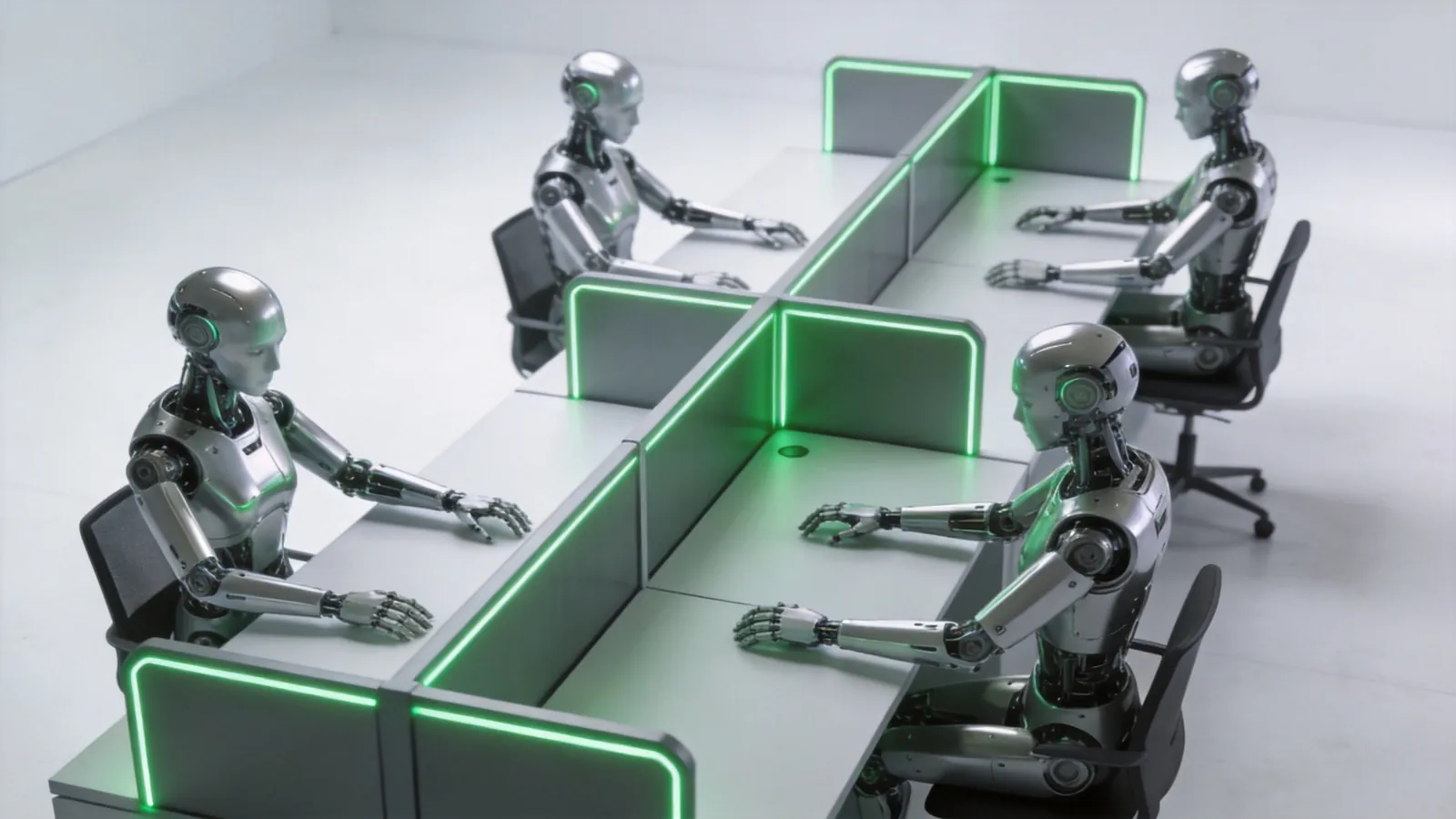
Core Thesis: From "Replacing Jobs" to "Replacing Departments"
Kai-Fu Lee's key message, paraphrased:
"We used to say AI replaces repetitive jobs—customer service, data entry, basic translation. But what we're seeing in 2026 is: multi-agent collaboration enables AI to replace entire departmental workflows. One DRI + 3 AI Agents = the output of a marketing department."
Illustrative comparison:
| Before (Replacing Jobs) | Now (Replacing Departments) |
|---|---|
| AI replaces CS reps → humans still do QA | CS Agent + QA Agent + Training Agent → entire CS dept shrinks |
| AI assists copywriting → humans still format & distribute | Writing Agent + Image Agent + Distribution Agent → 70% content ops automated |
| AI assists data analysis → humans still make decisions | Analysis Agent + Decision Agent + Execution Agent → report-to-execution full chain |
The core change: Not "AI makes one person do the work of three," but "AI lets one person manage three AIs, producing more than an entire department used to."
"DRI + Multi-Agent" Model: Enterprise Org Charts Must Be Rewritten
"DRI" = Directly Responsible Individual—Silicon Valley management term meaning regardless of team size, one person is ultimately accountable.
Kai-Fu Lee's proposed model:
Before: DRI → 3 subordinates → each does manual work
Now: DRI → 3 AI Agents → auto-execution + DRI handles exceptions only
Under this model, the lowest-performing human becomes the bottleneck, not the lowest-performing AI. Because AI Agents don't slack off, take sick days, or get emotional.
Lisa Su's Response: Declining Compute Costs Enable Multi-Agent
Lisa Su addressed this trend from a hardware perspective:
"The biggest barrier to multi-agent architecture was compute cost—running 3 LLM instances simultaneously could cost $2,000+/month. But now, edge chip inference capability has dramatically improved, and running 3 lightweight agents locally approaches zero marginal cost."
The subtext:
- AMD's NPU chip strategy centers on "local multi-agent deployment"
- Multi-agent compute demand is shifting from "cloud monthly burn" to "local hardware one-time investment"
- This aligns perfectly with Kaihe's product logic—run multi-agent locally, save on API costs
Who's Most at Risk? Who Benefits Most?
Three Most Endangered Roles
| Role | Why |
|---|---|
| Middle management execution layer | DRI+Agent model doesn't need "relay" layers |
| Pure process-oriented positions | Rule-bound, repetitive workflows run more precisely with Agents |
| Individual contributors who don't manage AIs | 1 person using AI to help themselves < 1 DRI managing multiple AIs |
Three Biggest Beneficiaries
| Role | Why |
|---|---|
| Strategic DRIs | Orchestrating AI workflows makes 1 person = 1 department's output |
| Cross-domain generalists | AIs handle "depth," DRI handles "breadth"—generalist value rises |
| AI tool developers | Enterprise demand for custom Agents is exploding |
Impact on SMEs: Coming Faster Than You Think
Kai-Fu Lee specifically highlighted the SME opportunity:
"Large enterprises need 3 years to restructure for multi-agent models. A small business can buy an AI device today and run their own agent team tomorrow. This is the SME's window for leapfrogging."
This is almost tailor-made for Kaihe A1—
| Dimension | Large Enterprise | SME + Kaihe |
|---|---|---|
| Deployment cycle | 3 years (org change) | 3 hours (out of box) |
| Cost | Millions (custom dev) | Under ¥1,000 (hardware) |
| Agent count | Requires compliance review | Run 3-5 agents immediately |
Bottom line: Kai-Fu Lee and Lisa Su jointly conclude: AI Agents are upgrading from "replacing jobs" to "replacing departments." Multi-agent collaboration means DRI + 3 Agents outperforms a department. SMEs are the biggest winners in this transformation.
AI Agent column tracks thought leader perspectives on the agent revolution.