Xiaomi MiMo Tops Global Dual Charts: How a Chinese Model Is Winning Overseas Developers
On May 17, Xiaomi's MiMo simultaneously topped both OpenRouter's daily and weekly leaderboards — the first Chinese model to achieve "dual #1" on the world's largest model routing platform. From MiMo-7B to MiMo-V2-Flash, how did a phone company's model earn Silicon Valley's respect?
A Phone Company, Topping AI Leaderboards
OpenRouter is the world's largest AI model routing platform, with over a million daily active developers. Hundreds of models compete daily — GPT-5.x, Claude 4.x, Gemini 3.x, Qwen 3.x — all heavyweight contenders.
On May 17, Xiaomi's MiMo took both #1 daily and #1 weekly positions simultaneously. This wasn't a one-day fluke — MiMo-V2-Flash has been consistently in the top three for days.
More importantly: MiMo didn't win through a single capability. It leads across reasoning, code generation, and multimodal understanding — all three dimensions.
MiMo's Breakthrough Path
Xiaomi's model strategy took an unconventional route:
| Phase | Model | Strategy |
|---|---|---|
| Early | MiMo-7B | Lightweight, phone-native focus |
| Mid | MiMo-V1 | Strengthened coding, attracting developers |
| Now | MiMo-V2-Flash | Open-source Agent engine, default for major Agent projects |
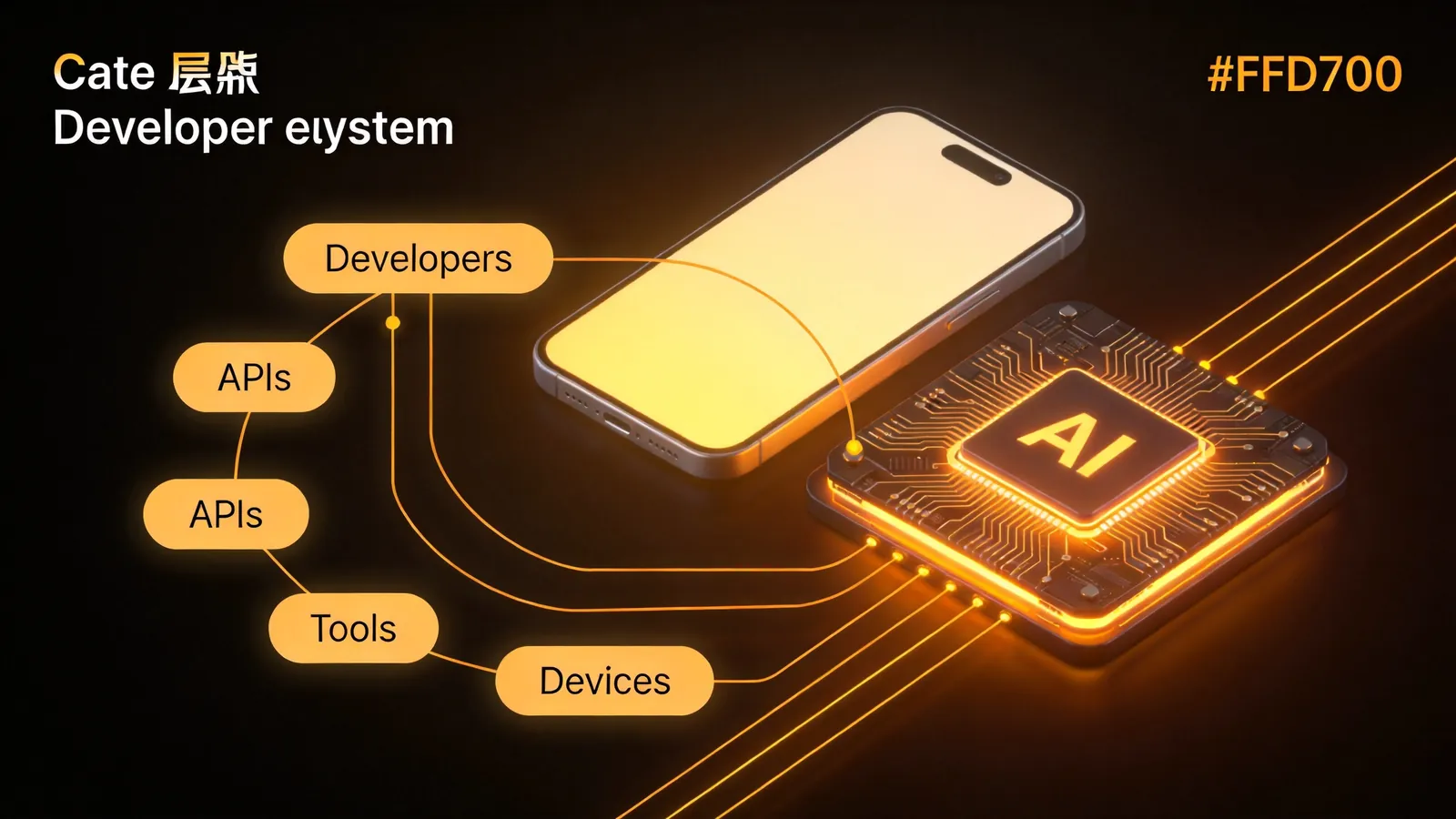
The critical inflection: MiMo evolved from "model" to "Agent engine." In the open-source community, popular projects including Hermes Agent have adopted MiMo as their default backend — meaning Xiaomi isn't just selling API access; it's building an ecosystem.
The Bigger Picture Behind the Numbers
MiMo's victory isn't an isolated event. Several data points reveal the true scale of China's AI:
- China's daily Token consumption exceeds 140 trillion
- Weekly consumption of 7.94 trillion has surpassed the US
- Open-source models contribute over 60% of usage
A shift many are missing: China's AI boom no longer depends solely on closed-source APIs from big tech. It's built on open-source models + developer ecosystems.
Xiaomi's playbook mirrors this trend: open-source MiMo engine → developer organic integration → default Agent project choice → ecosystem flywheel.
Xiaomi's AI Ambitions Go Far Beyond Phones
On the surface, MiMo extends Xiaomi's phone AI capabilities. But look closer:
- Smart vehicles: Xiaomi SU8's autonomous driving system already runs MiMo's inference engine
- Smart home: The Mijia ecosystem's AI control hub is migrating to MiMo
- Developer platform: MiMo's open-source community is growing at a rate comparable to early Hugging Face
What Xiaomi is doing mirrors Apple's classic strategy — not pursuing the single strongest parameter count, but building a complete "device + model + ecosystem" loop.
Implications for Local AI
MiMo's success sends two signals to Nizwo users:
First, open-source models are now "good enough." MiMo-V2-Flash topping global charts as an open model proves the gap between open and closed is rapidly narrowing. Local deployment isn't compromise — it's rational choice.
Second, the Agent ecosystem is the real moat. MiMo didn't win because it's the strongest model; it won because the most Agent projects integrated it. For Nizwo as an AI computer, models are engines — Agent ecosystems are the product.
In one sentence: MiMo's dual-chart victory isn't a "better model" story — it's an "open-source + Agent ecosystem beats closed API" story. China's real AI advantage isn't in parameters; it's in ecosystem.
The AI Frontier column continuously tracks industry developments, decoding the business logic behind the technology.